Market Update: Investing through geopolitical unrest
Recent events in the Middle East – and the way markets have responded – will understandably feel unsettling for some people. When geopolitical tensions dominate headlines, it’s natural to question what this means for your investments and whether you need to take action.
We want to provide some perspective, reassurance, and clarity around how these events are viewed through the lens of long‑term investing – and how your portfolio is positioned.
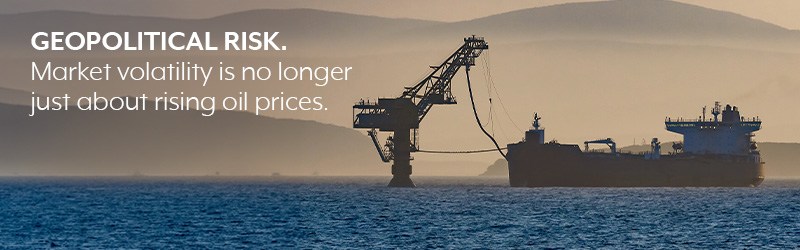
Headlines are loud – Diversified Portfolios are resilient
Right now, geopolitical risk globally is elevated and sits near the higher end of historical experience. However, history consistently shows that most geopolitical events do not leave a lasting imprint on investment markets.
While markets often react in the short-term, these moves are typically driven by uncertainty and emotion rather than lasting changes to economic fundamentals. In fact, market draw-downs following major geopolitical events have historically been modest and temporary, with markets often recovering sooner than expected.
Importantly, investors who remained disciplined – rather than reacting to headlines – have generally been rewarded over time.
Short‑term shocks vs Long‑term change
Not all geopolitical events are equal.
- Short‑term shocks (such as sudden escalations or military actions) tend to create volatility that fades as uncertainty clears.
- Structural changes – including rising defence spending, supply chain realignment, and competition for critical resources – are the forces that influence markets over longer periods.
Our role is not to react to every headline, but to focus on the deeper trends that matter and position portfolios accordingly.
How geopolitical risks affect markets today
In the past, geopolitical risk was largely about oil prices. Today, the transmission channels are broader and more complex. These include:
- critical minerals and rare earths.
- semiconductors and advanced technology.
- global supply chains and production networks.
- capital flows, sanctions and currency dynamics.
- infrastructure and cyber vulnerabilities.
Modern portfolios need to be built with these realities in mind – which is why diversification today must extend beyond simple country or sector exposure.
Why diversification matters more than ever
Traditional measures such as GDP size or index weights don’t always reflect true economic importance.
For example, some regions represent a small share of global GDP but play a critical role in global production networks, particularly in advanced technologies.
A disruption in a single link of the supply chain can ripple across the global economy. This is why diversification across geographies, asset classes, and production exposures is a core pillar of how we construct portfolios.
Our core partners in this process, Russell Investments and Morningstar – along with the range of specialist Fund Managers we use – invest heavily into research of structural trends and adapt to the changing landscape over time.
Bonds, inflation and portfolio resilience
It’s also important to recognise that in inflation‑driven geopolitical shocks, government bonds don’t always behave as a traditional “safe haven”.
In some scenarios, bond yields can rise at the same time equity markets fall. Whilst this can place short-term pressure on bond prices, a diversified approach in this space limits the downside in your defensive assets and – at current yields – future returns look promising in the bond space from a medium-term time horizon.
Furthermore, resilient portfolios today rely on a broader toolkit, including:
- inflation‑aware assets.
- real assets and infrastructure.
- select exposure to commodities and natural resources.
- alternative investments where appropriate.
How your portfolio is positioned
Your portfolio has been designed with the expectation that markets will experience periods of uncertainty over time, including geopolitical events.
Key principles underpinning our approach include:
- global diversification across regions and asset classes.
- alignment with your personal goals, time horizon and risk tolerance.
- consideration of your short‑term cash needs and strategic tax outcomes.
- exposure to assets that can help manage inflation and structural change.
- ongoing review, stress testing and strategy refinement.
Importantly, portfolios are built for resilience – not prediction.
Our role as Financial Advisers during volatile periods
A key part of our value is not just portfolio construction, but acting as a sounding board during inevitable market ups and downs.
Periods of heightened volatility can feel uncomfortable, but they are a normal part of investing. Making reactive decisions during these times often creates more risk than it removes.
We encourage you to reach out if you have concerns, questions, or simply want to talk through what’s happening. Staying informed, grounded and disciplined remains the most effective response.
In summary
Geopolitical headlines will continue, and markets will react from time to time. While some events contribute to longer‑term structural change, many shocks fade far more quickly than the news cycle suggests.
Portfolios that remain diversified, thoughtfully structured and aligned to long‑term objectives are better equipped to navigate these environments – while staying focused on what ultimately drives long‑term outcomes.
As always, we’re here to help guide you through the noise of current financial markets volatility. Contact us here if you'd like to talk one-on-one with Amir Rodnia or me.