Super Contribution Caps are increasing from 01 July 2026: what that means for you
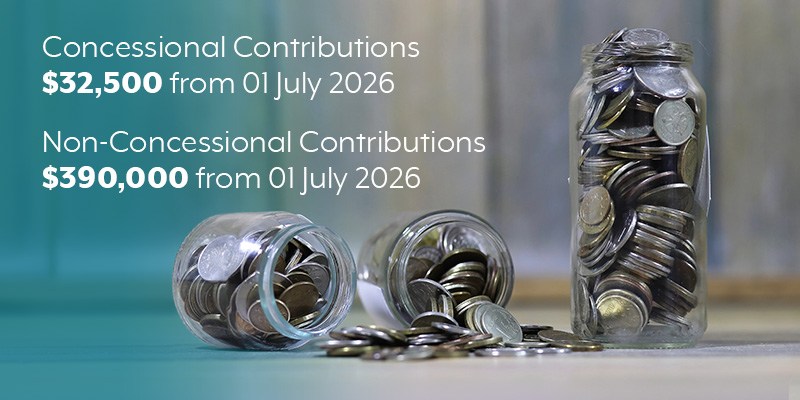
From 01 July 2026, the concessional (before-tax) superannuation contribution cap will increase to $32,500, giving Australians the ability to direct more income into super at concessional tax rates.
At the same time, higher non-concessional (after-tax) contribution caps and expanded bring-forward limits will create even more flexibility to build wealth inside the super system over the long-term.
For many people, super tends to sit in the background – growing steadily through employer contributions without much active planning. But changes like this are worth paying attention to. They present a genuine opportunity to review your strategy and make sure your super is working as effectively as possible for your future.
At a practical level, there are two main types of contributions to understand.
Concessional Contributions
Concessional contributions are made from income before tax is applied – this includes employer contributions, salary sacrifice, or personal contributions you claim as a tax deduction. These are generally taxed at 15% within super, which is often lower than your marginal tax rate, making them a very effective tool for both tax planning and long-term wealth creation.
Non-Concessional Contributions
Non-concessional contributions, on the other hand, are made from after-tax money. While they don’t provide an upfront tax deduction, they allow you to move more of your personal wealth into the super environment, where earnings are taxed concessionally and may become tax-free in retirement. Over time, that difference in tax treatment can have a meaningful impact on the value of your investments.
What makes the increases from 01 July 2026 significant isn’t just the higher limits themselves – it’s the additional opportunity they create. Being able to contribute more each year allows you to gradually shift more of your wealth into a tax-effective environment. Even relatively small increases, applied consistently, can lead to noticeably better outcomes over time thanks to compounding returns.
Bring-forward rule
For anyone approaching retirement, the opportunity becomes even more powerful. The bring-forward rule enables eligible individuals to contribute up to three years’ worth of non-concessional contributions in one go.
From 01 July 2026, this could allow a contribution of up to $390,000 in a structured way, subject to eligibility and balance thresholds. This can be particularly valuable if you have accumulated savings outside super – such as from the sale of a business or investment, or an inheritance – and you're looking to move those funds into a concessionally-taxed environment before retirement.
Planning and timing are key
Of course, while the opportunity is clear, the rules aren’t always simple. Contribution caps, timing, and total superannuation balance thresholds all play a role in determining what you can and should do. Getting the timing right – specially around the end of the financial year – or understanding how much capacity you have available can make a significant difference to the outcome.
That’s why a considered superannuation strategy is so important.
The focus shouldn’t simply be on contributing more, but on contributing in the right way, at the right time, and in line with your broader financial goals.
Pat Kelly, Director & Financial Adviser
Whether that involves increasing salary sacrifice, topping up with a personal deductible contribution, or planning a larger after-tax contribution, the right approach will depend on your individual circumstances.
At The Peak Partnership, we see changes like this as an opportunity to step back and bring clarity to your overall financial position.
By combining accounting and financial planning advice, we can help you understand exactly how the new contribution caps apply to you, identify where the opportunities sit, and put a plan in place to make the most of them.
Your next step
Ultimately, these changes are about giving you more flexibility and more control over how you build your retirement savings. With the right advice and a proactive approach, the increase in contribution caps from 01 July 2026 can become a meaningful step forward in achieving the financial future you’re working towards.
Feel free to reach out to our Financial Advisers if you want to know more about taking advantage of the increased superannuation contributions caps coming in on 01 July 2026.